
Attendance after hours: $80–$180
The figure that gets a licensed plumber to your door at night. Quotable on the phone, every time.
The first thing that happens is not a booking. It is a plumber telling you what to shut off right now, because the minutes before anyone arrives are where most of the damage is either done or prevented.
The honest test is whether it is still getting worse while you wait. Water, waste or gas going somewhere it should not, and not stopping. A burst pipe, sewage backing up into the shower, a hot water tank emptying through the ceiling, or any smell of gas: those are emergencies, and waiting until morning multiplies the damage bill.
Then there is the category people apologise for calling about: the only toilet in the house blocked, no hot water with a newborn, a drain backing up the night before an inspection. Call anyway. An after-hours call here reaches a plumber, not a promise of one tomorrow.


The slowest part of an apartment emergency is often not the plumbing — it is the door. Fob access, a basement that needs a resident to open it, a car park with no after-hours entry: any of those can add half an hour while water is still running.
Original cast iron and clay stacks serve dozens of flats per building, and decades of scale, grease and wipes narrow them until they block.
Two things worth doing before you ever need them: find your lot's isolation valve — usually in the laundry or a hallway cupboard — and save the building manager's after-hours number in your phone. Both take five minutes on a calm evening and both save real time on a bad one.
Original earthenware gives way at the joints, and it rarely announces itself politely. Roots find the joint, the joint opens, and the section finally lets go on a night with the house full and one bathroom working.
Drains laid when the deco blocks rose in the 1920s and 30s have corroded, cracked and shifted, snagging waste on rough internal surfaces.
Old pipe is not automatically bad pipe. But when a heritage-era line fails once, it is worth knowing whether you have had one bad joint or a tired run. We clear it, camera it before we leave, and you keep the footage — so any decision about relining is yours to make on evidence rather than on our word.
Grease does not block a line suddenly. It narrows it over months, and the failure arrives on the night of the highest load — a full service, a function, a long weekend.
That is why the useful question after a commercial blockage is not what went down the sink tonight, but when the trap was last pumped and the line last jetted. We will give you both dates from what the camera shows, and a realistic interval to keep to.
Ground close to the water holds more of it, sits lower, and moves more than ground further up. Over decades that shows up in the drainage as joints that have opened slightly, falls that have flattened, and lines that silt where they once ran clean.
The grand Moreton Bay figs around Arthur McElhone Reserve and Beare Park push roots into ageing joints beneath the lower streets.
None of that is an emergency by itself. It is the reason an emergency here often turns out to be the last stage of something that has been developing quietly, and why the camera run after the clear is worth more than the clear.
Southerly storms send water surging down from Macleay Street toward the bay, overloading heritage-era pits and gullies near the foreshore.
On sloping ground the problem is rarely where the symptom is. Water leaves a failure at the highest point and surfaces at the lowest, which can be several properties away and well downhill of anything you would think to look at.
It is also why a neighbour's overflowing gully is sometimes your blocked line, and occasionally the reverse. We work uphill from the symptom rather than digging where the water appears.
Clay drainage is laid in short lengths, so a single run has a great many joints, and after decades each one has opened a fraction. The line copes fine at normal flow and stops coping the moment demand spikes, which is why so many of these calls come on a weekend morning or after a full house has been showering.
Clearing restores flow the same night. Whether it holds depends on what the camera finds, and that is worth doing before the next long weekend rather than after it.
The honest test is whether it is still getting worse while you wait. Water running where it should not, sewage coming back up inside, any smell of gas, or a total blockage in a home with one toilet — those cannot wait, and they get a van.
A dripping tap, a slow drain, a toilet that still flushes eventually: those are real jobs, but they are cheaper tomorrow and no worse for waiting. We will tell you which one you have before anyone gets in a vehicle.
The figure that gets a licensed plumber to your door at night. Quotable on the phone, every time.
Business hours run about $120–$160. The premium is real and every genuine after-hours outfit charges one.
Attendance plus the first stretch of work plus minor parts. An isolated burst, a blocked toilet, a failed valve.
Slab leaks, gas faults, anything structural at 2am. Quoted before it starts, in writing.
The cheapest outcome, and one we give often. Describe it honestly and we will tell you which side of the line it is on.
The price is agreed before work starts, including at 2am. Figures here are indicative of the 2026 Sydney market rather than a quote from us, you get your own number as a fixed price before any work starts.
Describe what it is doing. Most faults can be narrowed down from the description alone, including the ones that turn out not to need a van tonight.
The crew covering Elizabeth Bay carries what after-hours faults actually need, because nothing is open at midnight to fetch a part from.
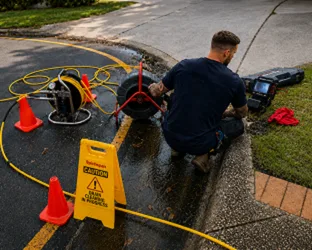
Isolate and contain before anything else, then diagnose properly and put a fixed number in front of you.

Repaired on the spot where possible, tested before we go, and the site left clean rather than mid-job.
Call and describe it. If it can hold, we will tell you, and book you at daytime rates. If it cannot, you will be glad you rang tonight.
Ring us and a plumber picks up. Leave details instead and you will get a callback with an ETA, not a sales call.

Leave your details and our local Elizabeth Bay team will call you back fast.